The Classroom I Never Wanted to Teach In

Some teachers inspire us by showing us everything we want to become. Others inspire us by showing us exactly what we don’t want to be. I had one of those teachers in high school, and more than forty years later, I still remember sitting in her classroom thinking that someday, if I became a teacher, I was going to do things differently.
It wasn’t that I expected every class to be exciting or every lesson to be entertaining. I just couldn’t imagine why learning had to be so incredibly boring!
As it turned out, that experience would influence my entire teaching career. But another classroom experience, this time involving a teacher dressed as a clown, helped me discover that there was another extreme I didn’t particularly want to embrace either. Somewhere between those two classrooms, I began developing my own philosophy about what it means to engage students in learning.
Fifty-Five Minutes of Predictability
It was the early 1980s, and I was sitting in my high school math classroom. Every day followed essentially the same routine. We started by going over the previous night’s homework. Students were responsible for putting answers to assigned problems on the board. I was usually responsible for problem number eleven, unless someone was absent and the assignments shifted. I quickly learned that I needed to make sure I had the correct answers for the two problems before and after mine, too. You never knew when you might need them! After reviewing the homework, our teacher would spend about five minutes introducing the next assignment. If we were lucky, there might be another five minutes at the end of class to begin working on it. And then we’d come back the next day and do it all over again. Fifty-five minutes. Every day. The same routine.
Now, I want to be clear that there’s nothing inherently wrong with classroom routines. Students often benefit from knowing what to expect, and a predictable structure can help create an organized, comfortable learning environment. But there’s a difference between having a routine and allowing that routine to become the entire learning experience.
I didn’t find the mathematics particularly interesting, and I certainly wasn’t inspired to explore it beyond what was required. Instead, I became pretty good at figuring out how to get through the class with as little effort as possible. I knew which problem I’d be responsible for. I knew approximately how much instruction we’d receive. And I knew that tomorrow would look almost exactly like today. I wasn’t particularly successful in the class, either. I finished with a D.
But I remember sitting there thinking that if I ever taught mathematics, I would find a way to make it more interesting. I couldn’t imagine spending an entire career teaching students who were as disengaged as I was.
When Students Learn to Play the System
One of the things I’ve thought about many times since becoming a teacher is how quickly students learn the patterns of a classroom.
When the routine is always the same, they become very good at predicting what’s going to happen. That can be helpful when it comes to organization and expectations, but it can also create opportunities for students to do the minimum necessary to get by. I certainly did! Rather than concentrating on understanding every homework problem, I learned to pay particular attention to the problems I might be called upon to explain. That wasn’t exactly the learning objective my teacher had in mind.
And I don’t think my experience was especially unusual. Students are often quite resourceful when it comes to finding shortcuts, especially when they don’t see much purpose in what they’re being asked to do.
As teachers, we sometimes interpret that behavior as laziness or a lack of motivation. Sometimes it is simply a student avoiding work. But I think we also need to ask whether we’ve created an environment where completing the task has become more important than understanding the material.
If students can succeed at the daily routine without engaging deeply with the content, perhaps we need to examine the routine itself. That doesn’t mean abandoning structure or constantly inventing elaborate activities. Sometimes something as simple as asking students to explain their reasoning, work through a problem with a partner, or apply a concept in an unexpected way can change the nature of the lesson. The goal isn’t to keep students guessing about classroom expectations. It’s to keep them thinking about what they’re learning.
And Then There Was the Clown
When I was in college preparing to become an art teacher, I had the opportunity to observe a variety of classrooms.
One of my earliest observations was in an elementary art classroom, and I remember being absolutely fascinated by the teacher. She was dressed as a clown. Not just for a few minutes at the beginning of the lesson. She spent the entire day dressed as a clown!
I honestly can’t remember the objective of the lesson or even what the students were creating. What I remember is the extraordinary amount of energy and preparation that teacher had invested in making the experience special. As a twenty-year-old preparing for my own teaching career, I was impressed. I was also absolutely terrified! Was this what teaching was supposed to look like? Would I be expected to create an elaborate performance every time I introduced a new lesson? Was every activity supposed to involve costumes, decorations, and some kind of song-and-dance routine? I loved being creative, but I couldn’t imagine maintaining that level of production for every lesson, every day, for an entire school year.
Looking back, I still don’t know whether that clown lesson was particularly effective. I don’t remember enough about the learning objective or what the students accomplished to make that judgment. Perhaps it was wonderful. Perhaps it was simply entertaining. It may very well have been both. What I do know is that it made an enormous impression on me as a future teacher.
And it helped me recognize another important truth: being an effective teacher shouldn’t require becoming a full-time entertainer.
The Lesson We Pull Out When Someone Is Watching
Years later, after I’d spent time teaching in my own classroom, I began to understand something else about that observation. Teachers often choose one of their favorite lessons when they know someone is coming to observe.
It’s understandable. Whether the visitor is a student teacher, an administrator, or another educator, we naturally want to demonstrate what we do well. We might choose a favorite activity, prepare a little more carefully than usual, or select a lesson we know tends to engage students successfully.
My husband pointed out that this reminded him of the Hawthorne Effect, the idea that people may change their behavior when they know they’re being observed. And there’s certainly a connection. An observation doesn’t always capture a completely typical day in a classroom. Sometimes it captures a carefully selected example of what that teacher does best. There’s nothing necessarily wrong with that, but it can create unrealistic expectations, especially for new teachers who haven’t yet discovered how much ordinary planning, preparation, grading, and classroom management are involved in the job.
That elementary art teacher may not have dressed as a clown every week. For all I know, she may have chosen that particular lesson because she loved it, because it fit her unit beautifully, or because she wanted to share something special with a future educator. What I eventually learned was that I didn’t need to reproduce her approach to become an effective teacher. I needed to develop an approach that worked for my students, my subject, and my own teaching style.
Student Engagement Isn’t the Same as Entertainment
I think this is one of the most important distinctions we can make as educators. An entertaining lesson isn’t necessarily an effective lesson, and an effective lesson doesn’t necessarily have to be entertaining. Students might love an elaborate activity without learning very much from it. They might also learn something incredibly important from a straightforward explanation followed by a challenging discussion. The question shouldn’t be whether students thought an activity was fun. It should be whether the activity helped them engage with the learning.
Educational research gives us good reasons to take active participation seriously. A 2014 meta-analysis published in Proceedings of the National Academy of Sciences examined 225 studies comparing traditional lectures with active-learning approaches in undergraduate science, technology, engineering, and mathematics courses. Across those studies, students in active-learning environments performed better on average, and traditional lecture courses had higher failure rates.
That doesn’t mean lectures are inherently bad or that teachers should abandon direct instruction. It also doesn’t mean every hands-on activity automatically improves learning. What it suggests is that giving students opportunities to actively process, discuss, practice, and apply information can make a meaningful difference. And those opportunities don’t have to be elaborate.
A good question can create engagement. So can a short discussion, a challenging problem, an unexpected demonstration, or an opportunity for students to explain something to one another. Sometimes students need to listen carefully. Sometimes they need to practice independently. Sometimes they need to collaborate, experiment, or work through a problem that doesn’t have an immediately obvious solution.
Effective teaching involves recognizing which approach is appropriate for the learning objective. Not deciding which activity will look the most impressive.
A Little Variety Can Make a Big Difference
I have nothing against structure. In fact, as a teacher, I appreciated having consistent procedures and clear expectations. Students need to know how the classroom operates, what they’re responsible for, and how their work will be evaluated.
But within that structure, I think there’s tremendous value in changing the way students interact with the material.
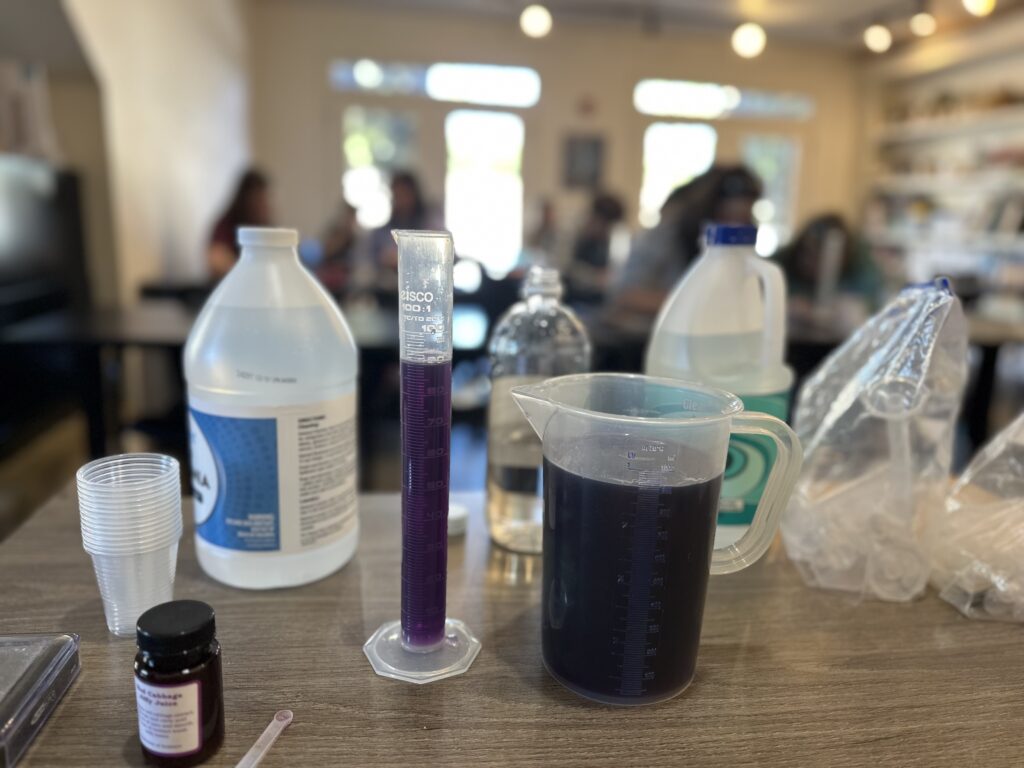
One day might involve a short lecture followed by practice. Another might include an experiment, a demonstration, small-group problem-solving, or a creative activity. Some lessons might require students to read and analyze information, while others might challenge them to build something, collect data, or explain their reasoning. Students don’t need to wonder whether the classroom rules will change tomorrow. They should, however, occasionally wonder what interesting problem or idea they’ll be exploring next.
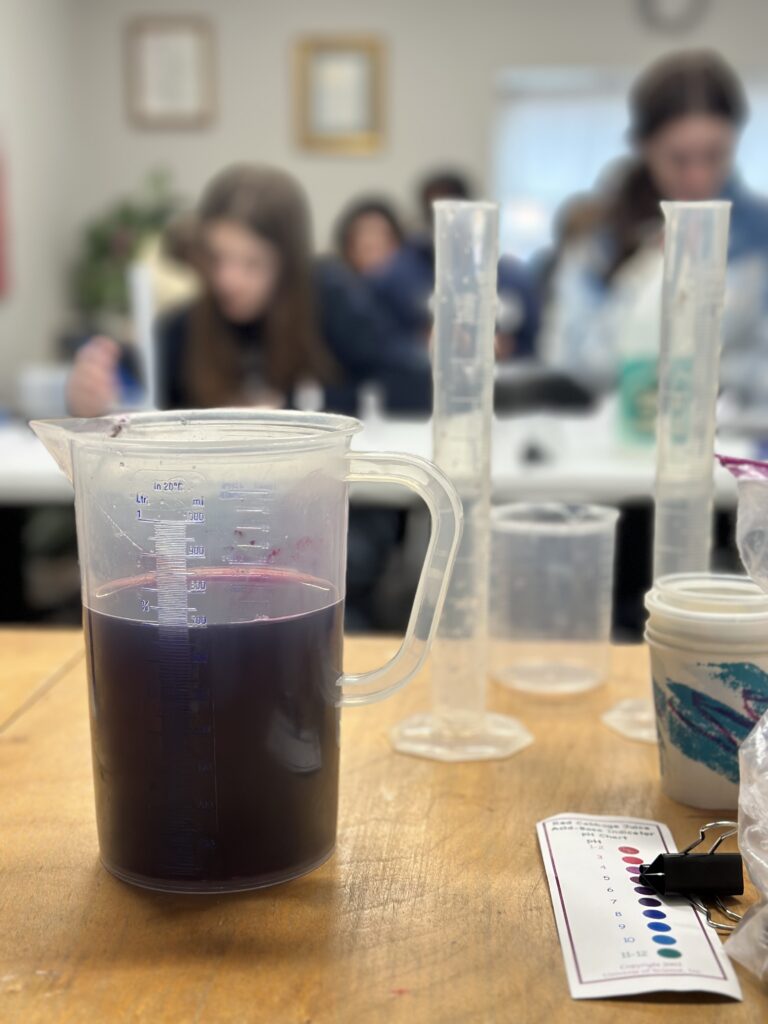
In my science classroom, I particularly enjoyed giving students opportunities to work with concepts rather than simply hear about them. That was one reason I embraced a flipped-classroom approach. By moving much of the initial instruction outside of class, I could use more of our time together for activities, experiments, discussion, and applying information. I also used guided notes, doodle notes, hands-on projects, demonstrations, and other strategies to help students interact with the content in different ways.
Not every lesson was exciting. Some topics required repetition, practice, and a certain amount of plain old hard work. I certainly didn’t have the time or energy to turn every unit into an elaborate production! But I wanted students to have opportunities to participate in the learning process instead of spending most of their time listening to me talk. And sometimes changing things up was as simple as asking them to approach a familiar concept from a different direction.
The Teachers I Remember
When I think about my favorite teachers, I don’t immediately think of one particular person or one spectacular lesson. Instead, I remember the teachers who challenged me. They were the ones who made me think, encouraged me to ask questions, and didn’t always follow exactly the same routine. We might work on different activities from one day to the next, discuss something unexpected, or explore a topic in a way that made us curious enough to want to know more. Those teachers didn’t necessarily entertain us. They engaged us. They also demonstrated that learning could be interesting without having to be easy.
I think there’s a temptation in education to confuse engagement with constant excitement. We want students to enjoy learning, so we sometimes feel pressured to make every lesson extraordinary. But an ordinary lesson taught well can be incredibly valuable.
Students don’t need a teacher dressed as a clown every day. They don’t need elaborate decorations, complicated games, or a new theme for every unit. They need teachers who understand the material, care about whether students are learning it, and are willing to adjust their approach when something isn’t working. Sometimes that means doing something creative and unexpected. And sometimes it means slowing down, explaining something again, and giving students the time they need to understand.
Becoming the Teacher I Wanted to Have
I’ve thought about that high school math classroom throughout my teaching career. I remember the boredom, the predictability, and the feeling that I was simply trying to get through another fifty-five minutes. I also remember how discouraging it could be when my efforts to organize information and stay focused weren’t understood.
Those experiences didn’t make me an expert in education, and they certainly didn’t mean I always got everything right when I became a teacher. But they gave me a perspective I never wanted to lose.
I wanted to remember what it felt like to be the student who wasn’t engaged, the student who struggled with a particular teaching style, and the student who wondered why learning couldn’t be more interesting. And I wanted to remember the teachers who had shown me something different.
Over the years, I discovered that creating an engaging classroom wasn’t about becoming a performer or designing the perfect activity for every lesson. It was about knowing my students, understanding what I wanted them to learn, and finding meaningful ways to bring them into the process. Sometimes I succeeded beautifully. Other times, lessons didn’t work quite the way I’d planned. That’s simply part of teaching. But I never wanted to stop asking whether my students were actually learning or merely completing the tasks I’d assigned them. Because there’s a big difference.
And more than forty years after sitting in that high school math classroom, I still believe something I thought back then:
Learning shouldn’t have to be boring, and teaching shouldn’t have to be a performance. Somewhere between the two is a classroom where students are challenged, involved, and genuinely learning.
What Kind of Teacher Inspired You?
Was there a teacher who influenced the way you teach today? Perhaps someone who made learning exciting, challenged you to think differently, or showed you what you wanted your own classroom to become.
Or maybe, like me, you learned something important from a classroom experience you didn’t particularly enjoy.
I’d love to hear your stories in the comments.
Happy teaching and creating!
Donna
Research and Further Reading
Freeman, S., et al. (2014). Active Learning Increases Student Performance in Science, Engineering, and Mathematics. Proceedings of the National Academy of Sciences, 111(23), 8410–8415.
This meta-analysis examined 225 studies involving undergraduate STEM courses and found that active-learning approaches improved average examination performance and reduced failure rates compared with traditional lectures. The findings support active student participation, although they don’t establish that every activity or instructional method will work equally well in every classroom.