Doodle Notes in the Science Classroom: More Than Just Coloring
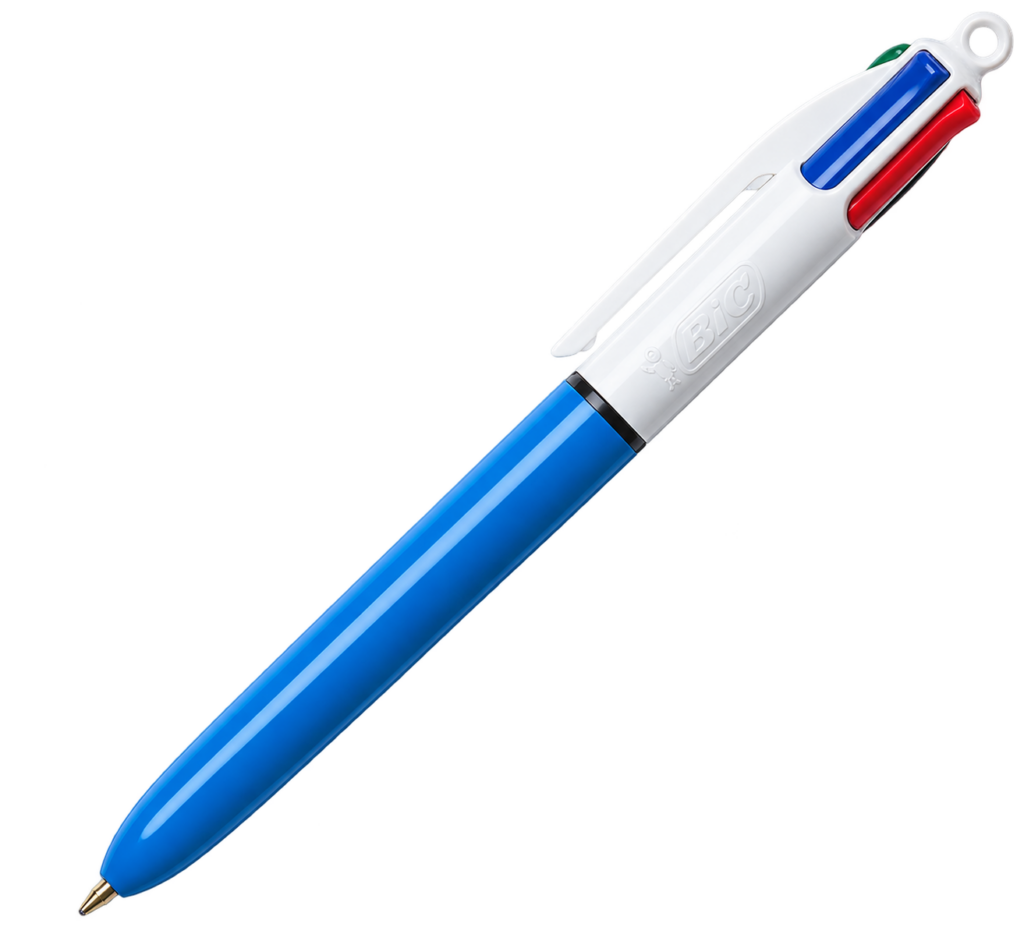
When I was in high school in the early 1980s, I had a favorite pen. It was one of those wonderful BIC four-color pens with little buttons at the top that let you switch between blue, black, red, and green ink.
I loved that pen!
I used it to box in headings, underline important information, color-code my notes, and add little drawings and doodles in the margins. My notebooks certainly didn’t look like traditional lecture notes, but there was a reason I organized them that way—even if I didn’t completely understand it at the time.
I sometimes had trouble maintaining my focus, especially in classes where the teacher spent most of the period lecturing. Sitting quietly and listening for an extended period wasn’t always easy for me. Somewhere along the way, I’d discovered that adding color, organizing information visually, and occasionally doodling helped me stay connected to what was happening in class.
Unfortunately, not all my teachers appreciated my approach.
My high school math teacher interpreted my doodling as a lack of attention and made a point of commenting on it in front of the class more than once. I remember how embarrassing that was, especially because what she saw as evidence that I wasn’t paying attention was actually part of my effort to remain focused.
Looking back as an educator, that experience has stayed with me. Publicly embarrassing a student is never a productive teaching strategy, and I think we need to be very careful about assuming we know what’s happening in a student’s mind simply by observing their behavior.
Of course, sometimes a student doodling in class really is distracted. But sometimes that same behavior may be part of how they’re managing their attention. The important thing is understanding the student rather than making assumptions.
Interestingly, when I reached college, my friends loved borrowing my notes! My headings were clearly marked, the information was organized into sections, and the color coding made important concepts easy to find. What one teacher had viewed as a distraction had become one of the strengths of my note-taking system.
I didn’t know anything about doodle notes or sketchnoting back then. I was simply using a method that worked for me.
Years later, when I began incorporating visual note-taking activities into my own science classroom, I realized I’d come full circle.
A Little History of Note-Taking
Visual note-taking isn’t nearly as new as we sometimes think. People have been combining words, illustrations, diagrams, and symbols to communicate information for centuries.
Even some of the strategies we think of as modern classroom techniques have been around for decades.
One familiar example is the Cornell Note-Taking System, developed by Walter Pauk at Cornell University in the 1950s. The method divides a page into sections for recording notes, identifying key ideas or questions, and summarizing information. It became widely known through Pauk’s 1962 book, How to Study in College.
Cornell notes were designed to help students do more than simply copy information. The structure encourages students to identify important concepts, review what they’ve learned, and generate questions that can be used for studying.
Another approach, guided notes, provides students with a partially completed outline or template. The teacher organizes the essential information in advance, and students complete missing details, explanations, or examples during instruction.
Guided notes have been used in classrooms for many years, particularly when teachers want to help students focus on important information without requiring them to organize an entire lecture from scratch.
Then there’s sketchnoting, a more visual approach that gained wider attention during the 2000s. Designer Mike Rohde began developing his sketchnoting approach around 2006, combining written information with drawings, symbols, arrows, and other visual elements. His 2012 book, The Sketchnote Handbook, helped introduce these techniques to a broader audience.
By the 2010s, visually organized note-taking templates were becoming increasingly familiar in classrooms and among teachers sharing educational resources.
Although the terms doodle notes and sketchnotes are sometimes used interchangeably, I think there’s an important distinction between students independently creating their own visual notes and students completing teacher-designed templates.
The doodle notes I used in my classroom were really a combination of guided notes and visual note-taking.
And that combination fit beautifully with the way I liked to teach.
How I Used Doodle Notes in My Classroom
During much of my high school teaching career, I used a flipped-classroom approach. Students completed a substantial portion of their initial instruction outside of class, which allowed us to spend more classroom time on experiments, activities, discussions, problem-solving, and applying what they’d learned.
I also wanted students to have some flexibility in how they learned and organized information. Not every student found the same note-taking approach helpful, and I didn’t believe they should all have to use an identical system for every lesson.
That didn’t mean I stopped teaching or giving notes in class. There were still plenty of times when a mini-lecture was the most appropriate way to introduce something, clarify a difficult concept, or bring everyone together around an important idea.
Those were often the occasions when I used doodle notes.
Rather than handing students a blank sheet of paper, I provided a template with the main headings, important sections, and visual organization already in place. Some pages contained fill-in-the-blank information, while others had spaces for diagrams, definitions, examples, or short explanations.
I frequently included hollow lettering that students could color, little icons representing different sections, and spaces for highlighting or adding visual details. I provided colored pencils, highlighters, and other supplies so students could add color while actively listening and completing their notes.
The key was that the structure was already there.
Students weren’t trying to decide what was important, organize everything on a blank page, and follow a new explanation all at the same time. The template identified the major concepts, allowing them to concentrate on completing the information and following the lesson.
With middle school students, I often combined doodle notes with a more traditional guided-note approach. These templates usually contained more information and additional blanks for students to complete. They still had opportunities to highlight, color-code, and personalize the page, but I provided more of the organization.
And I continued using Cornell-style templates and other note-taking approaches when those were more appropriate.
My goal wasn’t to make every lesson into an art project. It was to give students different tools for organizing and understanding information.
But Does Doodling Actually Help Students Learn?
This is where things get interesting!
For years, doodling was often viewed as evidence that someone wasn’t paying attention. If a student was drawing in the margins of a notebook, the assumption was that their mind must be somewhere else.
But research suggests the relationship between doodling and attention isn’t quite that simple.
In a study published in Applied Cognitive Psychology in 2010, psychologist Jackie Andrade investigated whether doodling interfered with or supported attention during a monotonous listening task.
Forty participants listened to a recorded telephone message. Half were asked to shade simple printed shapes while listening, while the other half listened without that additional activity.
The participants who shaded shapes recalled approximately 29% more information during an unexpected memory test.
That’s an interesting result, especially for those of us who have spent years watching students draw little pictures in their notebooks!
But there’s an important distinction. The participants weren’t completing chemistry notes, and they weren’t creating elaborate illustrations. They were simply shading shapes while listening to a rather boring recording.
The study suggests that a simple, low-demand activity may sometimes help people maintain attention, possibly by reducing mind-wandering. It doesn’t prove that doodle notes improve academic achievement or that coloring a worksheet automatically makes students learn more.
Still, it challenges the assumption that having a pen moving across the page must mean someone isn’t paying attention.
And I find that particularly interesting given my own experiences as a student.
Drawing to Learn Is Different from Decorating
There’s another area of educational research that’s especially relevant to science: drawing to learn.
A 2020 meta-analysis published in the Journal of Science Education and Technology examined 53 studies involving more than 8,000 participants. The researchers found an overall positive effect associated with learning activities in which students created visual representations of information.
This is particularly interesting in science, where so many concepts involve structures, relationships, systems, and processes that can be difficult to understand through words alone.
Consider a student learning about the structure of an atom, the movement of energy through an ecosystem, or the relationship between forces acting on an object. Creating or completing a meaningful diagram can encourage students to think about how the individual parts relate to one another.
But there’s an important distinction between drawing to understand something and simply coloring something that’s already been drawn.
When students create a diagram to represent a scientific process, they’re making decisions about how the information fits together. When they color a decorative border, they may be enjoying the activity, but they aren’t necessarily processing the science in the same way.
Both activities can have a place in the classroom, but they don’t accomplish the same thing.
That’s one reason I believe the content and structure of doodle notes are far more important than how colorful the finished pages become.
When I designed a doodle-note activity, I wanted students to interact with the essential information. The graphics, layout, and color opportunities helped organize the material and made the activity more inviting, but they weren’t substitutes for understanding the concept.
The science still had to be there!
Doodle Notes, Cornell Notes, or Guided Notes?
I’ve used all three approaches, and I don’t think one is automatically better than the others.
Cornell notes provide a system for recording, reviewing, and studying information. The sections for questions and summaries encourage students to revisit what they’ve learned rather than simply put their notebooks away after class.
I used Cornell-style templates with my students, sometimes providing the page layout so they could focus on recording and organizing information.
Guided notes offer more structure during instruction. The teacher identifies the important information and provides an outline or partially completed document. Students fill in the missing details as the lesson progresses.
This can be especially useful when introducing complicated material or working with students who are still developing their note-taking skills.
A 2020 systematic review examined 22 studies involving guided notes in higher education. The researchers found that students generally viewed guided notes positively and that the approach could improve learning outcomes in certain content areas, particularly when the material was complex.
Although the studies focused on adult learners, they offer useful insight into why providing structure can help students manage information.
Doodle notes, at least the way I used them, combined that structure with visual organization and opportunities for coloring, highlighting, and making connections.
The headings were already there. Important concepts had designated spaces. Students could focus on completing the content while using color and visual details to organize the information.
And then there were sketchnotes, which generally required students to make more of their own decisions about how to represent information visually.
All of these approaches can be useful, but they ask students to do different things.
For an extended lecture or reading assignment, Cornell notes might be an excellent choice. For a complex introductory topic, guided notes might help students focus on the most important information. When I wanted a short, structured lesson with visual elements, doodle notes were often a good fit.
And when students were ready to synthesize information independently, creating their own diagrams or sketchnotes could offer another opportunity to demonstrate understanding.
The best note-taking method depends on the student, the content, and the purpose of the lesson.
It’s Not an Art Competition!
One thing I always wanted students to understand was that doodle notes weren’t supposed to become an art competition.
You didn’t need to be a talented artist, and your finished notes didn’t need to look like something you’d frame and hang on the wall.
Some students loved experimenting with colors and decorating every available space. Others preferred to use just a couple of highlighters to identify important information. Some added little drawings, while others focused almost entirely on the written content.
That was fine with me.
I provided the materials and opportunities, but the purpose was always learning. If the visual elements helped students stay engaged or organize ideas, wonderful! If they preferred a simpler approach, that was fine, too.
I think this is especially important when we’re discussing creative teaching strategies. We need to be careful not to replace one rigid expectation with another.
A student shouldn’t have to produce beautifully colored notes to demonstrate that they’ve learned something.
And a student whose notes look different from everyone else’s shouldn’t automatically be considered distracted or disorganized.
I certainly would have appreciated that understanding from my high school math teacher!
An Example from My Chemistry Classroom: Introducing the Mole
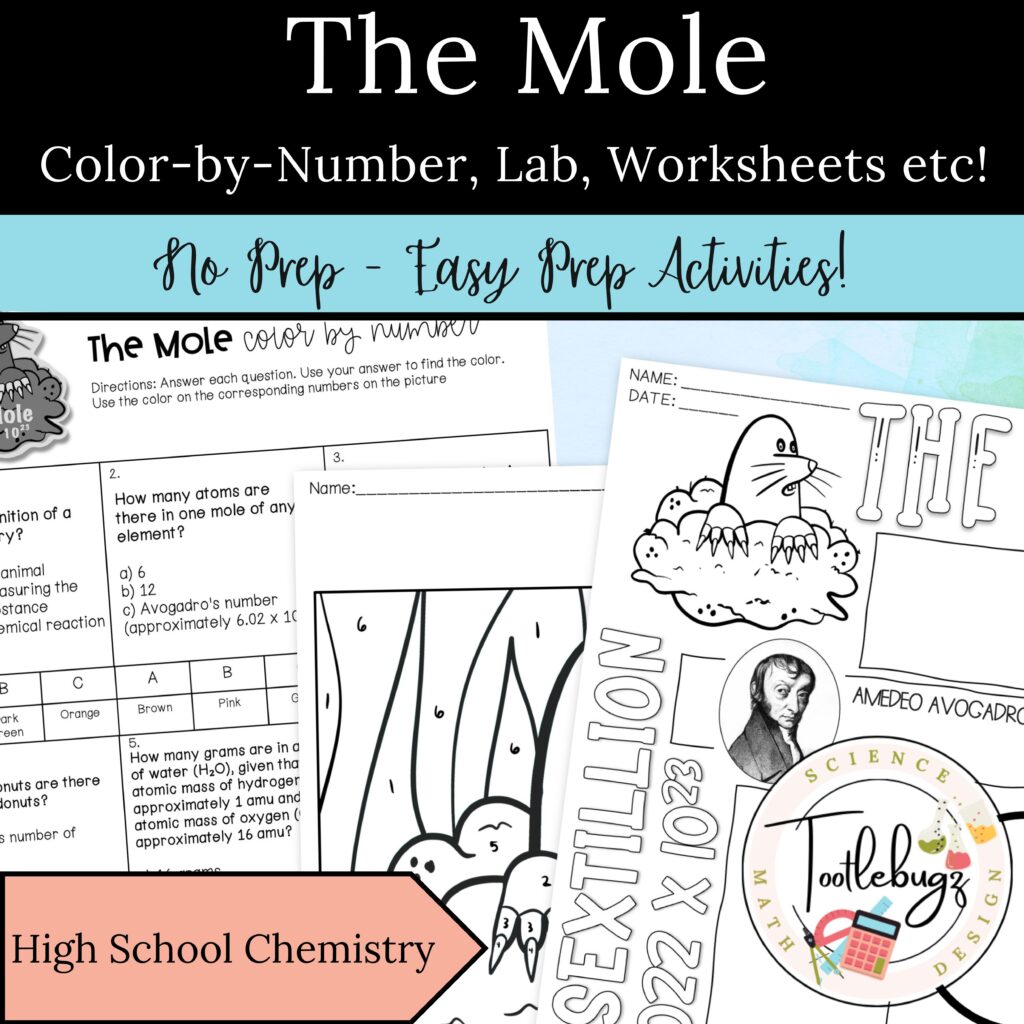
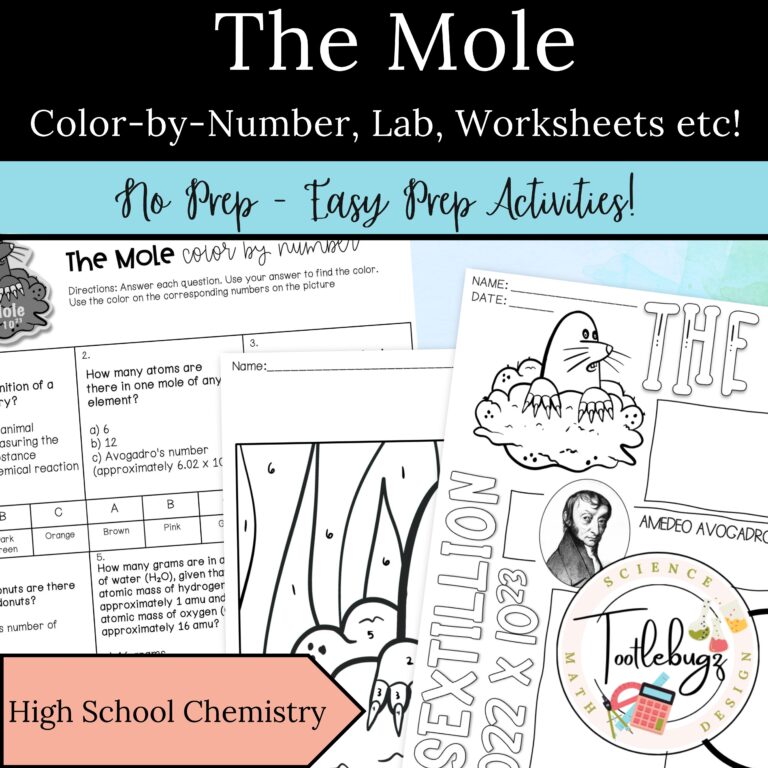
One of my favorite examples of how I combined different learning activities is my Introduction to the Mole Activity Set for high school chemistry.
The mole can be a challenging concept for students encountering it for the first time. Avogadro’s number, approximately 6.022 × 10²³, is so enormous that students often struggle to understand what it represents before they ever begin working with molar mass and conversions.
I wanted to introduce the concept in a way that was approachable without overwhelming students with complicated calculations.
The activity set combines several approaches, including an informational reading sheet, structured doodle notes, a color-by-number activity, a practice worksheet, and a simple hands-on lab using familiar materials.
Each component serves a purpose. The informational sheet introduces important ideas, the doodle notes provide a visual structure, and the practice activities give students opportunities to reinforce what they’ve learned. The lab brings in a hands-on component.
I designed the activities to work together during a block-schedule class or across two traditional 50-minute periods.
It’s a good example of something I’ve always believed about teaching science: students benefit from encountering important concepts in more than one way.
You can read more about the resource and my approach to introducing the chemistry mole in my GoAlongs article, Celebrate Mole Day! Making the Chemistry Mole Fun and Understandable.
It’s About Learning, Not Just Coloring
When I think back to that four-color BIC pen I carried in high school, I realize that my interest in doodle notes didn’t begin with a teaching trend or a particular educational resource.
It began with my own experience trying to find a way to stay engaged and organize information. And years later, when I began designing activities for my students, those experiences influenced the choices I made.
I wanted students to have structure when they needed it, flexibility when it was appropriate, and opportunities to engage with information in ways that made sense to them.
I enjoy creating visually interesting educational materials, and I love bringing creativity into the science classroom. But I don’t believe doodle notes are magical, and I certainly don’t believe they’re the answer to every instructional challenge.
What matters most is what students are thinking about while they’re using them.
Are they identifying important information? Making connections? Asking questions? Applying what they’ve learned?
If the answer is yes, then the notes are doing their job.
And if adding a little color makes the process more enjoyable, I don’t see anything wrong with that!
After all, I’ve always believed that creativity and learning belong together.
And sometimes, all it takes to get started is a four-color pen.
What Works in Your Classroom?
Do you use traditional notes, Cornell notes, guided notes, doodle notes, or some combination of approaches?
I’d love to hear about the strategies you’ve found helpful, especially when introducing challenging science concepts.
And if you were one of those students who doodled through lectures, I’d love to know whether you’ve continued using visual note-taking techniques as an adult!
Happy teaching and creating!
Donna
Research and Further Reading
For anyone interested in exploring the research behind note-taking and visual learning, here are a few useful starting points:
- Andrade, J. (2010). What Does Doodling Do? Applied Cognitive Psychology, 24(1), 100–106. Examines the relationship between simple doodling, attention, and recall.
- Cromley, J. G., Du, Y., & Dane, A. P. (2020). Drawing-to-Learn: Does Meta-Analysis Show Differences Between Technology-Based Drawing and Paper-and-Pencil Drawing? Journal of Science Education and Technology, 29, 216–229. Reviews evidence on student-generated visual representations and learning.
- Biggers, B., & Luo, T. (2020). Guiding Students to Success: A Systematic Review of Research on Guided Notes as an Instructional Strategy from 2009–2019. Journal of University Teaching and Learning Practice, 17(3). Reviews research on guided notes in higher education.
- Cornell University. Take Note: Popular Study Method Has ‘Cornell’ Written All Over It. Background on Walter Pauk and the history of Cornell notes.
- Rohde, M. (2012). The Sketchnote Handbook: The Illustrated Guide to Visual Note Taking. Peachpit Press. An introduction to modern sketchnoting and visual note-taking techniques.