Celebrate Mole Day! Making the Chemistry Mole Fun and Understandable
October 23 is a special day for chemistry teachers everywhere. It’s Mole Day! Celebrated from 6:02 AM to 6:02 PM on 10/23, this unofficial chemistry holiday recognizes one of the most important numbers in chemistry: Avogadro’s number, approximately 6.022 × 10²³.
If you’ve ever taught chemistry, you know that introducing the mole concept can be a challenge. Students are comfortable counting things they can see, but asking them to imagine 602,200,000,000,000,000,000,000 particles is another story!
That’s why I love using Mole Day as an opportunity to introduce this important concept with a little creativity, some hands-on learning, and a whole lot of fun.
What Exactly Is a Mole?
In chemistry, a mole is a unit used to count extremely large numbers of particles, such as atoms, molecules, or ions. Just as a dozen represents 12 items, a mole represents approximately 6.022 × 10²³ particles.
The difference, of course, is that a mole is an almost unimaginably large number!
For students encountering this concept for the first time, the number itself can be overwhelming. And when we immediately move into calculations involving molar mass, conversions, and chemical equations, it’s easy for students to get lost in the mathematics before they understand what they’re actually counting.
Over my years teaching high school chemistry, I found that students benefited from slowing down and developing a basic understanding of the mole before tackling more complicated calculations.
And if we can make that introduction fun, even better!
Making the Mole Concept Meaningful
I’ve always believed that students learn science best when they have opportunities to explore ideas in different ways. Reading about a concept is helpful, but combining that information with visual learning, hands-on activities, and a little creative practice can make it much more memorable.
That’s the philosophy behind my Introduction to the Mole Activity Set, one of my favorite resources to use in my own chemistry classroom.
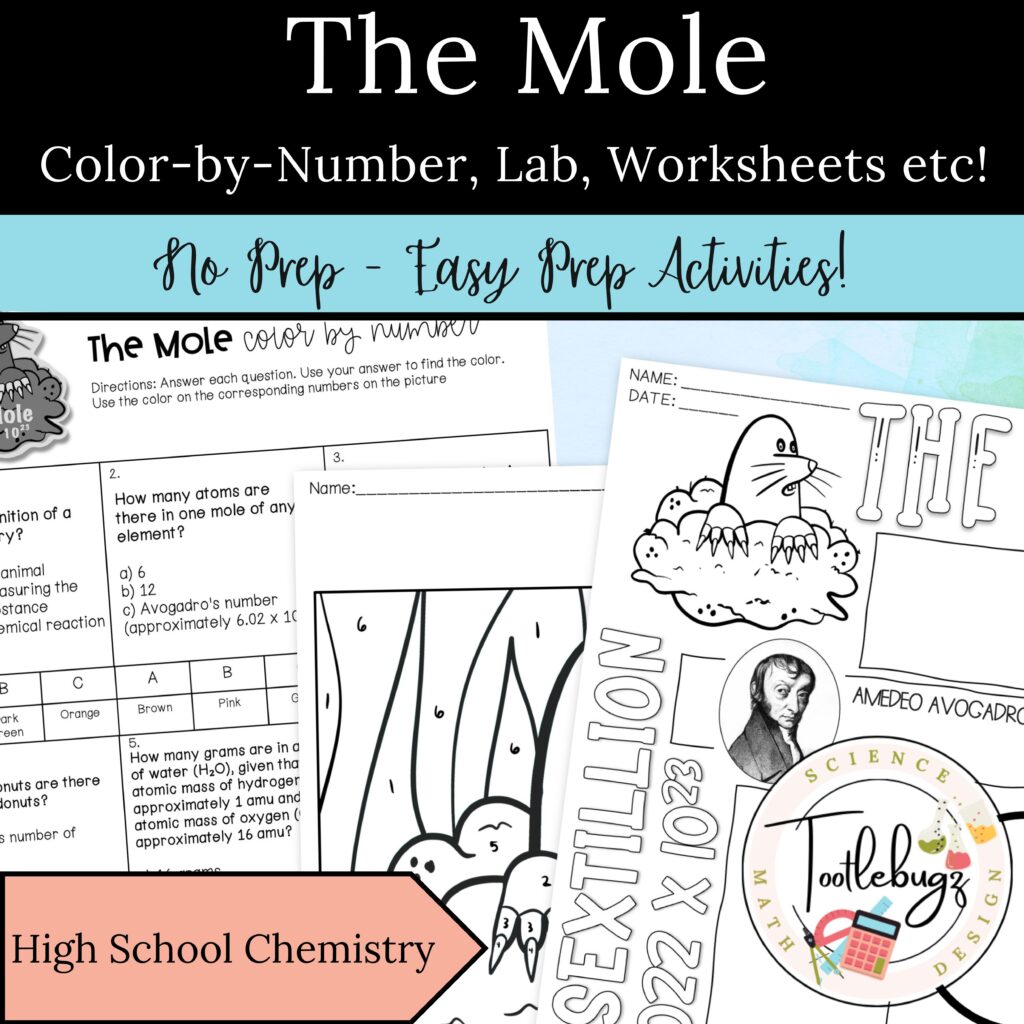
I designed it to be straightforward, approachable, and easy to incorporate into an existing chemistry unit. Rather than overwhelming students with complicated mole calculations on the first day, the activities help them become comfortable with the concept itself.
The set includes several ways to approach the topic:
- Student information sheet introducing the mole and Avogadro’s number.
- Doodle Notes that combine essential information with visual organization and creativity.
- Color-by-number activity with six questions for reinforcing understanding.
- Practice worksheet with six additional questions.
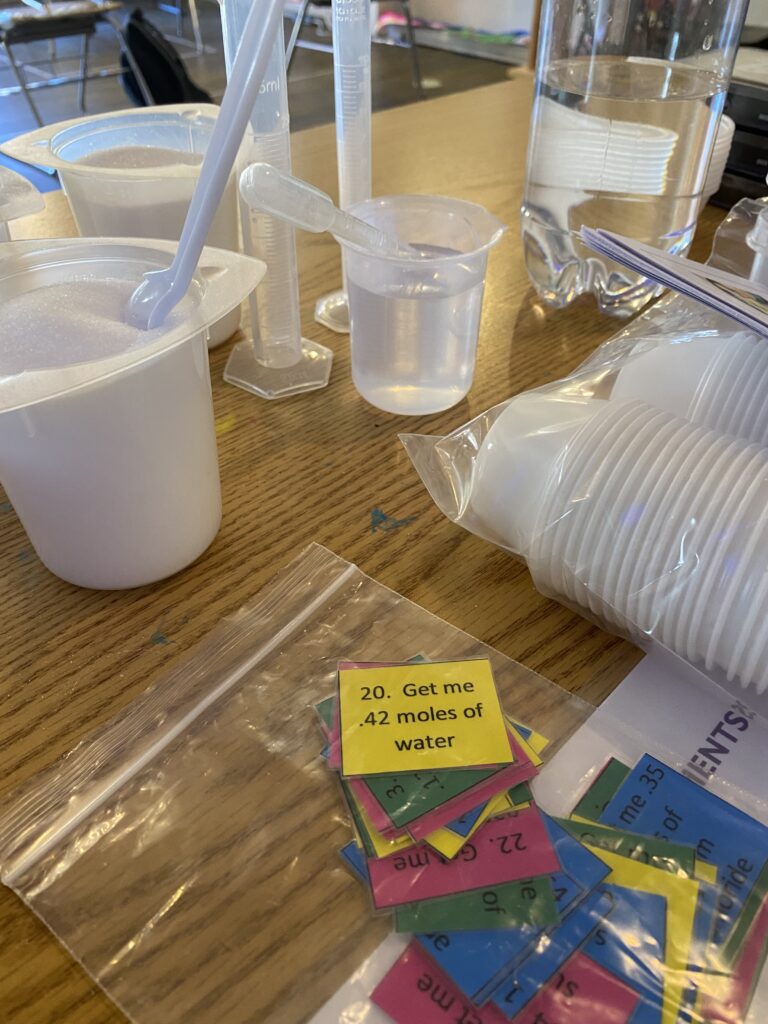
- Simple hands-on lab using familiar materials such as baking soda, salt, water, vinegar, and sugar, along with scales that measure in grams.
- Video links and additional activity ideas to help bring the concept to life.
- Bonus Avogadro’s number banner available in both color and black-and-white versions.
Answer keys are included, and most of the activities require little or no preparation beyond gathering materials for the lab.
Everything can be completed within a block-schedule class or spread across two traditional 50-minute class periods.
A Little Creativity Goes a Long Way
One of my favorite parts of the resource is the Doodle Notes activity. I’ve used visual notes and creative learning activities throughout my teaching career because I believe students benefit from having multiple ways to connect with new information.
Doodle Notes aren’t just about making a page look attractive. They provide opportunities for students to organize important ideas, make visual connections, and interact with information instead of simply copying notes from a board.
I’ll be sharing more about how I’ve used Doodle Notes in my science classroom in an upcoming GoAlongs article!
Celebrate Mole Day in Your Classroom!
Whether you’re planning a full Mole Day celebration or simply looking for a fresh way to introduce Avogadro’s number, October 23 is a wonderful opportunity to make chemistry a little more memorable.
And you certainly don’t have to limit these activities to Mole Day. The resource works just as well whenever you’re introducing the mole concept in your chemistry curriculum. It can also be adapted for physical science or more advanced middle school students.
Looking for a ready-to-use introduction to the mole?
I hope it helps you make this challenging chemistry concept a little less intimidating and a lot more fun for your students!
Happy Mole Day!
Donna